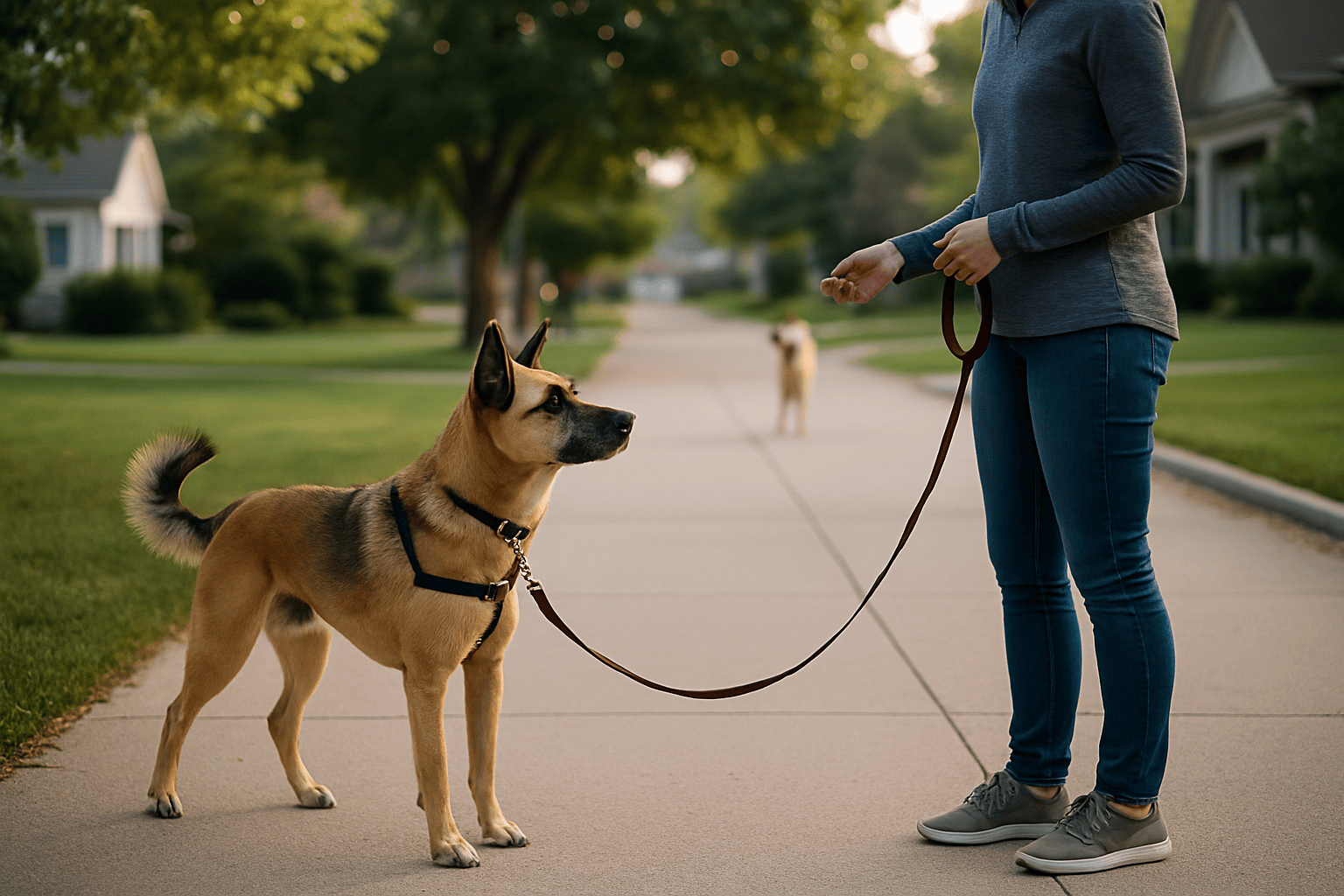
If you’ve ever found yourself gripping a leash while your dog barks, lunges, or whines uncontrollably at another dog, a stranger, or even a bicycle, you’re not alone. Reactivity is one of the most common behavioural challenges dog owners face. And while it can be stressful, embarrassing, and confusing, reactivity is also highly manageable—with the right understanding and the right tools.
This guide explains what dog reactivity is, where it comes from, and most importantly, how to manage it through positive reinforcement strategies that support both you and your dog.
What Is Dog Reactivity?
Reactivity refers to an overreaction to specific stimuli. It’s a behavioural response that may include barking, lunging, growling, whining, or pulling. A reactive dog isn’t necessarily aggressive. Instead, they are reacting to a perceived threat, frustration, or overexcitement.
Common Triggers:
-
Other dogs (especially on leash)
-
People (strangers, children, men in hats)
-
Bicycles, skateboards, and scooters
-
Cars, motorcycles, or loud noises
-
Unfamiliar environments or enclosed spaces
Reactivity can range from mild to intense and can vary based on the dog’s past experiences, breed tendencies, and daily stress levels. Many owners confuse reactivity with aggression, but the two are different. Aggression involves intent to cause harm, while reactivity is more about emotional overwhelm.
ALSO READ: How to Make Your Dog Healthier
Why Do Dogs Become Reactive?
Understanding the “why” behind reactivity is the first step toward managing it. Every reactive dog has their own unique story, but most reactive behaviours fall under one or more of these categories:
Genetic Predisposition
Some breeds are more reactive by nature. Herding dogs like Border Collies or guarding breeds like German Shepherds are often highly alert and sensitive to movement or unfamiliar people.
Lack of Early Socialization
If a dog wasn’t properly exposed to a variety of sights, sounds, people, and dogs during their critical developmental window (around 3–14 weeks of age), they may struggle to cope with novelty later in life.
Trauma or Negative Experiences
Rescue dogs or dogs that have experienced a traumatic event (like being attacked by another dog) may develop fear-based reactivity as a defense mechanism.
Frustration
Many dogs become reactive because they’re frustrated. A friendly dog that can’t greet another dog on a walk may lunge or bark out of excitement and restriction—this is known as barrier frustration.
Handler Involvement
Sometimes owners accidentally reinforce reactivity through tension on the leash, panicked responses, or by avoiding every potential trigger, which can prevent dogs from learning coping skills.
Types of Reactivity
It’s helpful to categorize reactivity into types, so you can better understand what your dog is feeling and how to respond.
| Type | Description | Common Signs |
|---|---|---|
| Fear-Based | Triggered by perceived threats or unfamiliarity | Growling, cowering, avoidance |
| Leash Reactivity | Frustration due to leash restraint | Barking, lunging, pulling on leash |
| Excitement-Based | Friendly over-arousal, not fear | Whining, jumping, hyper-focus |
| Territorial | Guarding space or property | Barking at fences, windows, doors |
Understanding the type of reactivity your dog exhibits can help you create a more targeted training plan.
Managing Reactivity with Positive Reinforcement
The goal of managing reactivity is not to suppress behaviour with punishment but to help your dog feel safe and confident in the presence of their triggers. This is where positive reinforcement comes in—it builds trust and teaches your dog new ways to respond.
1. Create Distance
One of the most effective strategies is distance management. The further away your dog is from a trigger, the more likely they are to remain under threshold (calm and responsive).
-
Cross the street when another dog approaches
-
Use parked cars, trees, or driveways as visual blocks
-
Don’t force interactions with people or dogs
Distance gives your dog the space they need to process the environment and make better choices.
2. Desensitization and Counterconditioning
These two techniques work together to change your dog’s emotional response to triggers.
-
Desensitization involves exposing your dog to the trigger at a level they can tolerate without reacting.
-
Counterconditioning pairs the trigger with something positive, like high-value treats.
Example:
If your dog reacts to other dogs at 20 feet, start working at 40 feet. Every time your dog sees a dog, immediately give a tasty treat. Over time, your dog will begin to associate dogs with good things instead of fear or frustration.
3. Use Marker Words or a Clicker
A marker is a signal that tells your dog, “That’s the behaviour I like.” Most people use “Yes!” or a click from a clicker. Mark and reward when your dog:
-
Looks at a trigger and stays calm
-
Looks away from the trigger
-
Offers eye contact or walks politely
This encourages your dog to repeat those behaviours.
4. Teach Engagement and Focus Cues
Engagement games teach your dog to look to you for guidance instead of reacting. Try these:
-
Look at Me: Teach your dog to make eye contact on cue
-
Touch: Have your dog target your hand with their nose
-
Find It: Toss treats on the ground to redirect focus and lower arousal
Practice these in low-distraction environments before using them around triggers.
5. Make Walks Calmer
-
Use a front-clip harness for better control without pain
-
Walk during quiet times of day or in low-traffic areas
-
Let your dog sniff and take their time—sniffing is calming and mentally enriching
What Not to Do
Avoid These Common Mistakes:
-
Punishment: Yelling, leash jerks, or shock collars may suppress behaviour temporarily but often increase anxiety or fear
-
Flooding: Forcing your dog into situations they can’t handle (like dog parks or crowded sidewalks)
-
Inconsistency: Using mixed signals or switching between techniques
-
Tight Leash: Keep your leash loose when safe to do so—tension increases your dog’s stress
Your dog is not being stubborn—they’re overwhelmed. Reactivity is an emotional response, not disobedience.
When to Get Professional Help
Some cases of reactivity require support from a certified professional. You should consider working with a force-free trainer or behaviour consultant if:
-
Your dog’s behaviour is escalating
-
You feel unsafe walking your dog
-
You’ve tried on your own without progress
-
Your dog reacts to multiple triggers or in unpredictable ways
Look for credentials like CPDT-KA, KPA-CTP, or CDBC—and ensure the professional uses science-based, humane methods.
Use our Find a Trainer Near You tool to connect with qualified trainers in your area.
Track Progress and Celebrate Wins
Managing reactivity is a journey. Celebrate the small wins—they matter.
Start a Reactivity Journal:
| Date | Trigger | Distance | Behaviour | Notes |
|---|---|---|---|---|
| July 1 | Dog | 30 ft | Looked, no bark | Gave chicken, stayed calm |
| July 3 | Jogger | 10 ft | Barked, recovered quickly | Used “Find it” game |
Over time, these logs show how much your dog is learning. Even small improvements are signs of trust and progress.
Conclusion
Reactivity can feel overwhelming at times, but it’s also a sign that your dog is trying to communicate something. With patience, consistency, and a positive reinforcement approach, you can help your dog feel safer and more confident in the world around them.
You don’t have to walk this path alone. Reach out for support, learn from your dog’s body language, and remember—every reactive dog has the potential to grow and thrive with the right guidance.